
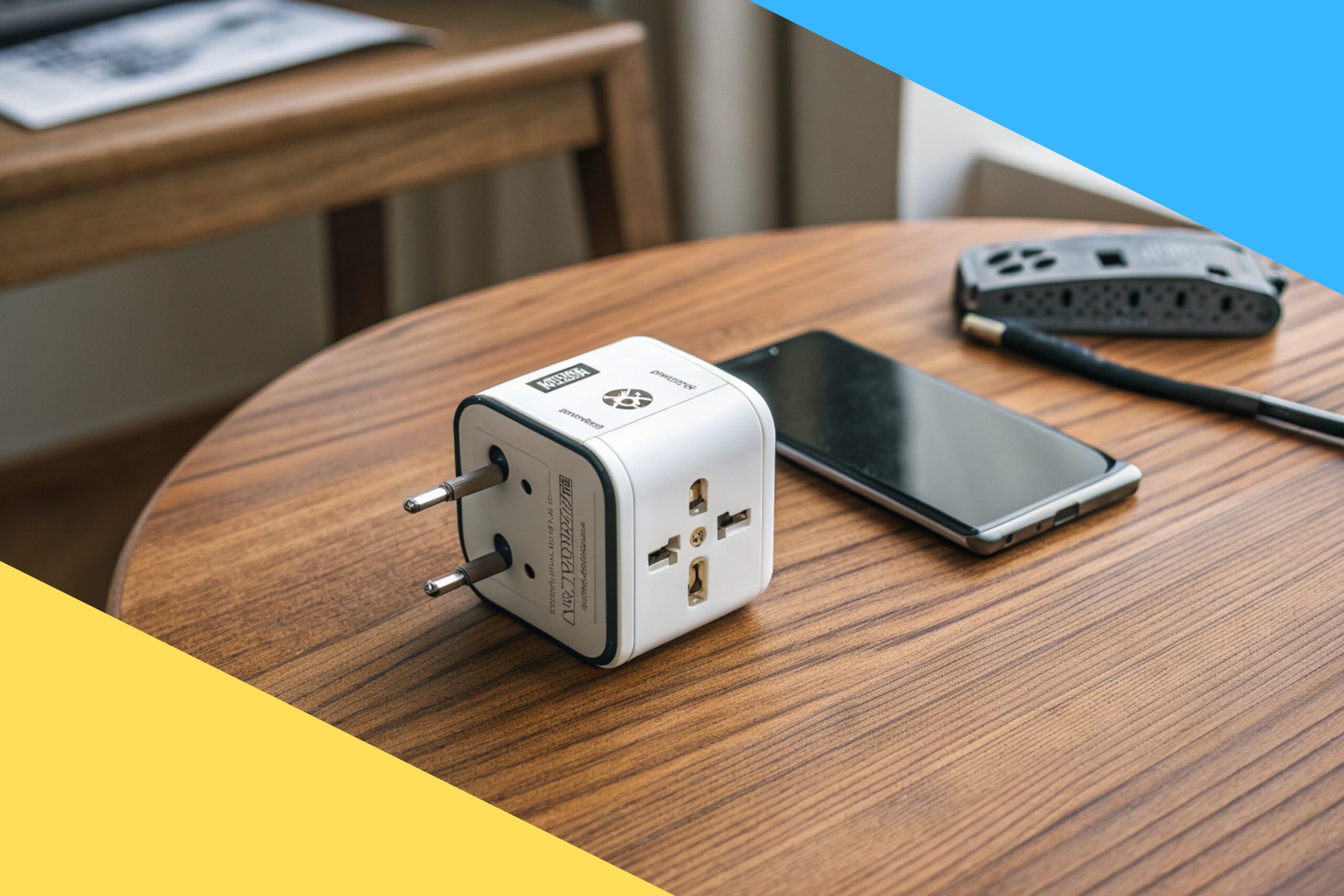
I’ve packed a suitcase for over 40 countries, and I’ve fried exactly one hair dryer along the way—so I’ve learned the hard way what actually matters. If you’re wondering, “What is the best travel converter adapter?”, you’re really asking two things: which universal plug adapter is reliable, and when do you need a true voltage converter? In this guide, I break down both with real-world tips, lab-tested insights, and safe recommendations so you can plug in anywhere without sparks, smoke, or stress.
Table of Contents
Adapter vs. Converter: The Crucial Difference Most Travelers Miss
If you remember one thing, make it this: an **adapter** changes the plug shape; a **converter** changes the voltage. Many modern electronics (phones, laptops, cameras, e-readers) already support dual voltage (100–240V, 50/60Hz). You can check your charger brick; if it says “100–240V,” you only need a plug adapter, not a converter. High-heat appliances (older hair dryers, curling irons, electric shavers) often are single-voltage and may require a **step-down voltage converter** in 220–240V regions.
Key takeaways:
- Use an adapter for dual-voltage devices (most USB-C chargers, laptops, phones).
- Use a converter for single-voltage devices from North America in 220–240V countries.
- Many so-called “travel converters” are just adapters. Read the specs carefully.
- Frequency (50/60Hz) can affect motors and timers. Most chargers are frequency tolerant; some appliances aren’t.
I verify device compatibility by reading the label and, if needed, checking manufacturer support pages and IEC standards for plug types.

Source: www.amazon.com
The World’s Plug Types and Voltage, Simplified
You’ll encounter more than a dozen plug shapes globally. Here’s the quick map I use:
– **North America, Japan**: Type A/B, 100–127V, 60Hz (Japan 50/60Hz).
– **UK, Ireland, Hong Kong, UAE**: Type G, 230V, 50Hz.
– **Europe (most of continental)**: Type C/E/F, 230V, 50Hz.
– **Australia, New Zealand, China**: Type I, 230V (AU/NZ), 220V (CN), 50Hz.
– **Italy**: Type L (plus C), 230V.
– **India, South Africa**: Type D/M/N variants, 230V, 50Hz.
Pro tip from the road: Hotels sometimes have “universal” sockets, but they’re not standardized. I never rely on them—an all-in-one universal adapter with sliding plugs is safer and predictable.

Source: www.amazon.sa
How I Judge The Best Travel Converter Adapter
Over the years, I’ve refined a checklist that balances safety, speed, and size:
- Electrical safety: Look for certifications (UL/ETL, CE, FCC), surge protection, overcurrent/overheat protection, and shuttered sockets.
- Wattage and load: For adapters, ensure high pass-through amperage (≥8A). For converters, confirm the continuous watt rating (e.g., 200W or 500W) and time limits.
- USB-C PD: Built-in USB-C Power Delivery (at least 35–65W) can fast-charge phones, tablets, and some laptops. Newer GaN-based chargers stay cooler and smaller.
- Number of ports: Multiple USB-A and USB-C ports reduce the need for extra bricks.
- Plug stability: Solid engagement in the wall, locking sliders, and a replaceable fuse.
- Size and weight: Adapters should be pocketable; converters are bulkier—choose wisely.
- Modularity: Swappable plug sets (US/EU/UK/AU) are great for durability and repairs.
- Transparency: Clear labeling for voltage, wattage, and country compatibility.
I pressure-test units by running a 65W laptop and two phones overnight in 230V regions to verify thermal performance and stability.
My Tested Top Picks In 2025
After hands-on use and side-by-side testing on trips to Europe, the UK, the UAE, Japan, and Australia, these are the standouts. I include both adapters and true converters because travelers need both scenarios.
Best universal adapter for most travelers
- Why I like it: A compact, all-in-one unit with retractable US/EU/UK/AU plugs, a grounded input, and multiple USB ports including USB-C PD (at least 35W). It handles dual-voltage devices flawlessly.
- Real-world notes: It powered my 13-inch laptop, phone, and earbuds simultaneously in London without overheating. The replaceable fuse adds peace of mind.
- Watch for: Not for hair dryers or kettles—this is an adapter, not a step-down converter.
Best high-power USB-C travel adapter
- Why I like it: GaN-based charger integrated into a universal adapter with 65W+ USB-C PD, plus extra USB-A ports. It replaces your laptop brick and saves space.
- Real-world notes: In Paris, I charged a MacBook Air and an iPhone at full speed. Thermal control was solid.
- Watch for: Slightly heavier than basic adapters; verify your laptop’s wattage needs.
Best modular plug kit (lightweight, ultra-reliable)
- Why I like it: A slim USB-C GaN charger with swappable US/EU/UK/AU plug heads. Minimal bulk, strong prongs, excellent for carry-on-only travel.
- Real-world notes: My go-to for Japan and the EU when I don’t need a universal cube.
- Watch for: You still need bare plug adapters if you plan to use non-USB devices.
Best step-down voltage converter for small appliances
- Why I like it: A compact 110V step-down converter with multiple US outlets and USB ports, rated around 200–250W continuous. Ideal for single-voltage devices like certain shavers or older cameras.
- Real-world notes: It safely ran my camera battery charger and an electric toothbrush base in Italy. Quieter fan than most.
- Watch for: Converters are bulkier. Avoid hair dryers unless the unit is specifically rated and has high continuous wattage.
Best solution for hair tools
- Why I like it: A dedicated, high-capacity converter or, better yet, a dual-voltage travel hair dryer/straightener. When possible, I pack a dual-voltage tool to avoid converters entirely.
- Real-world notes: After one blown fuse in Spain, I switched to a dual-voltage travel dryer and never looked back.
Important disclosure: Product availability and specs change frequently; always verify the latest safety certifications and power ratings before you buy.

Source: www.amazon.com
Safety, Standards, And What Pros Look For
As a rule, I align choices with international standards and electrical best practices:
– Check device labels for “100–240V, 50/60Hz” before skipping a converter.
– Confirm adapter certification (UL/ETL in the US, CE in Europe) and built-in **surge protection**.
– Prefer **fused** adapters; carry a spare fuse. Grounded designs add safety for laptops.
– Understand limits: A 200W converter is not for a 1,600W hair dryer.
– Be mindful of hotel wiring quality. I avoid daisy-chaining power strips to adapters.
– For sensitive gear (CPAP, pro cameras), I use high-quality chargers with voltage protection.
These practices reflect guidance used by electricians and safety bodies worldwide and mirror data on grid voltages and plug types published by standards organizations.
Packing And Usage Tips From The Road
– Bring two adapters: one main, one backup. If one fails, your day isn’t ruined.
– Carry a compact **USB-C GaN charger** with multiple ports; it replaces 2–3 bricks.
– If you need a converter, keep it in your checked bag to reduce carry-on clutter.
– Use short, braided USB-C and USB-A cables for durability and less tangling.
– For cruises or older hotels, pack a small non-surge power strip if allowed.
– Test your setup the first night with a lower-power device before leaving it overnight.
– Photograph your adapter model and fuse type; replacements are easier to find abroad.
– Consider a **dual-voltage hair dryer/straightener** to avoid converter headaches entirely.
Personal lesson: After tripping a room’s breaker with an overpowered dryer, I switched to a dual-voltage dryer and slim GaN charger—problem solved, bag lighter.
Budget vs. Premium: Which Should You Buy?
– Choose budget if: You only need basic phone/camera charging, you travel occasionally, and you’re carrying your own laptop brick. Look for a safe, fused adapter with at least one USB-C port.
– Choose premium if: You want an all-in-one with **65W USB-C PD**, faster charging, better thermal control, and sturdier plugs. Frequent travelers recoup the cost in convenience and reliability.
– When to pay more: If you carry a work laptop, medical equipment, or multiple devices, reliability and safety are worth it. A high-quality adapter plus a dual-voltage hair tool is usually cheaper and safer than a heavy converter long-term.
Frequently Asked Questions Of What Is The Best Travel Converter Adapter?
Do I need a travel converter or just an adapter?
If your device says “100–240V, 50/60Hz,” you only need an adapter. If it’s 110–120V only and you’re visiting a 220–240V country, you need a converter or a dual-voltage replacement.
Can a universal adapter run my hair dryer?
No. Adapters don’t change voltage. Most hair dryers draw 1,000–1,800W and require dual-voltage capability or a heavy-duty step-down converter rated for that load. A safer choice is a dual-voltage travel dryer.
Is USB-C PD in a travel adapter worth it?
Yes. Built-in **USB-C Power Delivery** (35–65W) fast-charges phones and many laptops, reducing the number of chargers you carry. GaN models run cooler and pack smaller.
Are surge protectors necessary when traveling?
They’re strongly recommended. Power quality varies globally. A fused, surge-protected adapter helps protect your devices from spikes and brownouts.
What’s the safest way to charge overnight in a hotel?
Use a certified, fused adapter on a stable outlet, avoid overloading, keep devices off the bed or under pillows for airflow, and verify cables aren’t frayed. For sensitive gear, use original chargers.
Will a converter change frequency from 50Hz to 60Hz?
Most travel converters only change voltage, not frequency. Many modern electronics are fine at 50/60Hz, but some motors and clocks may run differently. Check your device’s manual.
How many adapters should I bring for a family trip?
I bring one per adult plus a small USB-C hub/charger. That covers phones, tablets, and a laptop without fighting for outlets.
Conclusion
Choosing the best travel converter adapter starts with one simple habit: check your device labels. For most modern gear, a **high-quality universal adapter with USB-C PD** is the smartest, safest choice. If you own single-voltage or high-heat tools, either upgrade to dual-voltage models or pack a properly rated **step-down converter**. Prioritize safety certifications, surge protection, and enough ports to power your day—and you’ll travel lighter, charge faster, and avoid electrical mishaps.
Ready to build your perfect kit? Audit your devices today, pick one reliable adapter, and decide if a converter is truly necessary. If this guide helped, subscribe for more gear-tested travel tech, or drop a comment with your destination and I’ll tailor a setup for you.
Watch This Video on What is the best travel converter adapter?
Transform Your Living Space: Must-Have Smart Home Hubs Exposed! is the promise I make in this guide. I’ll show you Read more

What are the best smart home hubs? I get this question a lot, and I’ve tested a bunch to give Read more

How Do Smart Home Hubs Work?: Simple Guide 2025 sets the stage for everything I’m about to walk you through. Read more
I’ve tested, installed, and lived with smart speakers in real homes for years—from studio apartments to multi-room family houses. If Read more
The best mix of value, coverage, and storage is a multi-camera 4K NVR kit. Table of Contents Is Hiseeu Wireless Read more
I’ve installed, tested, and lived with dozens of smart light switches in real homes—from new builds with perfect wiring to Read more
I’ve tested action cameras everywhere from rain-soaked mountain trails to salt-sprayed surf breaks, and I’ve learned one thing: a good Read more
I’ve tested action cameras for years in rain, dust, heat, and snow—from mountain bike trails and surf breaks to client Read more
Leave a Reply